- HubPages»
- Home and Garden»
- Cleaning»
- Eliminating Pests
How to Rid your Yard of Mosquitoes

Global Warming - a plague of mosquitoes
Health experts worldwide are warning of the effect global warming will have on the increase and spread of mosquitoes and the diseases they carry. It's time to do our bit to decrease mosquito populations. However, different mosquito species (and there's more than 3500) respond in different ways and there are so many variations in their behaviors and in the things that attract and repel them.
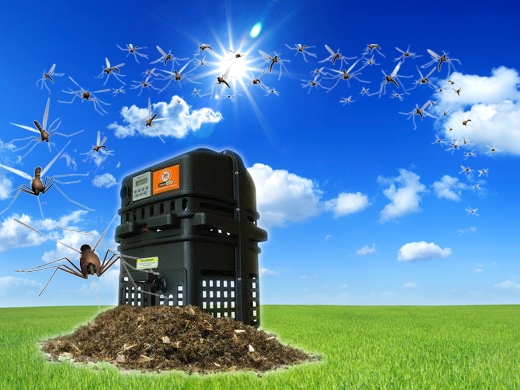
FIRST LINE OF DEFENSE - Mosquito Traps
Because of their effectiveness and long life a good mosquito trap (or traps) is a worthwhile investment, especially when you use them in conjunction with other sensible control measures endorsed by the American Mosquito Control Association. So far they appear to be one of the best chemical-free ways to keep a yard clear of biting insects; "These traps represent an evolving technology that is a most welcome addition to our mosquito control armamentarium"(AMCA).
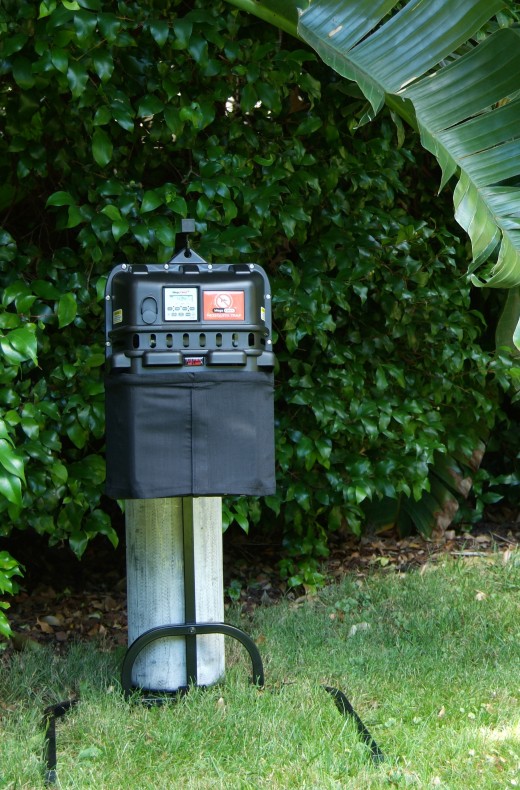
How They Work
There are a number of different brands, with different operating systems, to choose from. Brands like Skeetervac, Flowtron and Mosquito Magnet® burn propane both to power the trap and to release CO2. The propane (or LPG) is combusted to produce CO2, water vapor and heat to attract mosquitoes.
Some propane alternatives include Dynatrap®, Koolatron® and Mega-Catch™ which are electric and provide coverage from 1/2 acre up to 1.5 acres depending on model. They are typically multi-attractant traps that use a combination of light, shape, heat, movement and color to attract mosquitoes. Dynatrap® marketing materials claims CO2 is generated when the titanium dioxide coating interacts with the UV light. However the manufacturer gives no supporting material on how this works or of the quantities of CO2 produced.
Mega-Catch™ also produce a CO2 trap, the Pro 900 Ultra, which utilizes pure CO2 cylinders. This is safer and cheaper to run than propane traps.
Location, location, location!
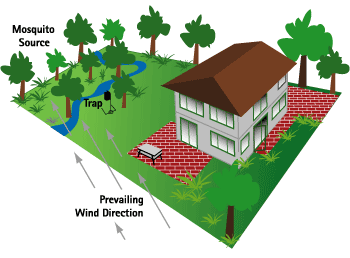
Mosquito traps function best when set up around the perimeter of a yard, attracting mosquitoes towards them, and away from human activity. Never put mosquito traps near people because that just draws the mosquitoes toward their targets. And the right location is absolutely essential. Where you place your trap will govern just how successful you are with your mosquito control program.
To maximize capture rates you need to place the trap upwind of mosquito breeding sites. Most mosquito species avoid direct sunlight so shaded, sheltered areas - preferably amongst bushes and shrubs is preferable. For Daytime biters like the Asian tiger, studies have shown that catch rates in shade or partial shade were over three times higher than those in areas exposed to the sun
Close to or amongst flowering plants that provide nectar is another ideal site because mosquitoes also feed on nectar for energy.
Mosquito Trap Checklist
The size of your property, number and location of mosquito breeding sites will help you determine what type of trap and how many. You may need more than one. Check the manufacturer's recommended coverage area and don't buy a trap based on price alone.
- Safety - Propane traps are generally considered more of a risk because of leaking propane which can be a potential fire hazard. Over 130,000 propane traps (Mosquito Deleto) were recalled in 2002 because of this problem.
- Reliability and Maintenance. Generally propane traps are more prone to start-up problems, burnout and blockages. They are more costly to maintain and repair.
- Affordability - Some of the smaller models start at only $99. However these are generally for small gardens or patios. You get what you pay for - the more expensive models usually have more features and a greater coverage area.
- Features - Traps that have programmable timers which can be set to come on during hours that mosquitoes are most active are more cost effective and cheaper to run than traps that need to run 24/7.
- Attractants - The Use of Octenol lures, baits or attractants as they're commonly referred to, in traps can significantly increase catch rates for some species but not others. Depending on the species in your neighborhood, a bit of experimentation may be necessary to work out whether to use baits or not.

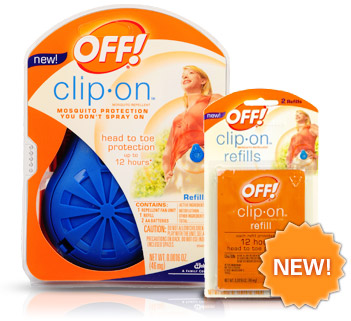
SECOND LINE OF DEFENSE - Spatial Repellents
While mosquito traps work to ATTRACT, TRAP and KILL mosquitoes and are designed to be set up AWAY from human activity. Spatial repellents are designed to work in close quarters and can be placed on tables etc, to REPEL mosquitoes.
Spatial repellents can include candles, torches as well as plug in or small clip on devices like the OFF!® Clip-On™ Mosquito Repellent. This is a personal repellent device you simply clip to your belt, purse or chair. It has a quiet, battery-powered fan that circulates odorless repellent and, within minutes, according to the manufacturers, creates head-to-toe protection for up to 12 hours.
Citronella is a well-known natural mosquito repellent and in addition to lotions and sprays, the oils from the plant are extracted and used to make candles. For those amongst us who find the aroma of citronella overpowering, one of the newest mosquito repelling candles on the market from Bite-Lite™ contains citronella together with the pleasant aroma of lemongrass and spearmint.

Personal Repellents
Most experts would consider insect repellents the number one weapon against mosquitoes, and Deet has one of the best track records. Roughly one third of Americans use DEET based products and it repeatedly tops the competition in efficacy studies. For those who don't like Deet, there are alternatives and the U.S. Centers for Disease Control (CDC) also recommends repellent products containing, Picaridin (Cutter), Oil of Lemon of Eucalyptus (Repel) and IR3535 (Avon Skin So Soft).
However the type of mosquitoes in an area will affect the performance of the different repellents and for travelers outside the USA, you should look up the CDC's webpage for additional recommendations.
Repellents don't actually kill mosquitoes and they do nothing to permanently reduce your mosquito population the way traps do. So for an effective DIY mosquito control program you can't go past a combination of traps, personal repellents and spatial repellents.